Why This Deck Needs a Redesign
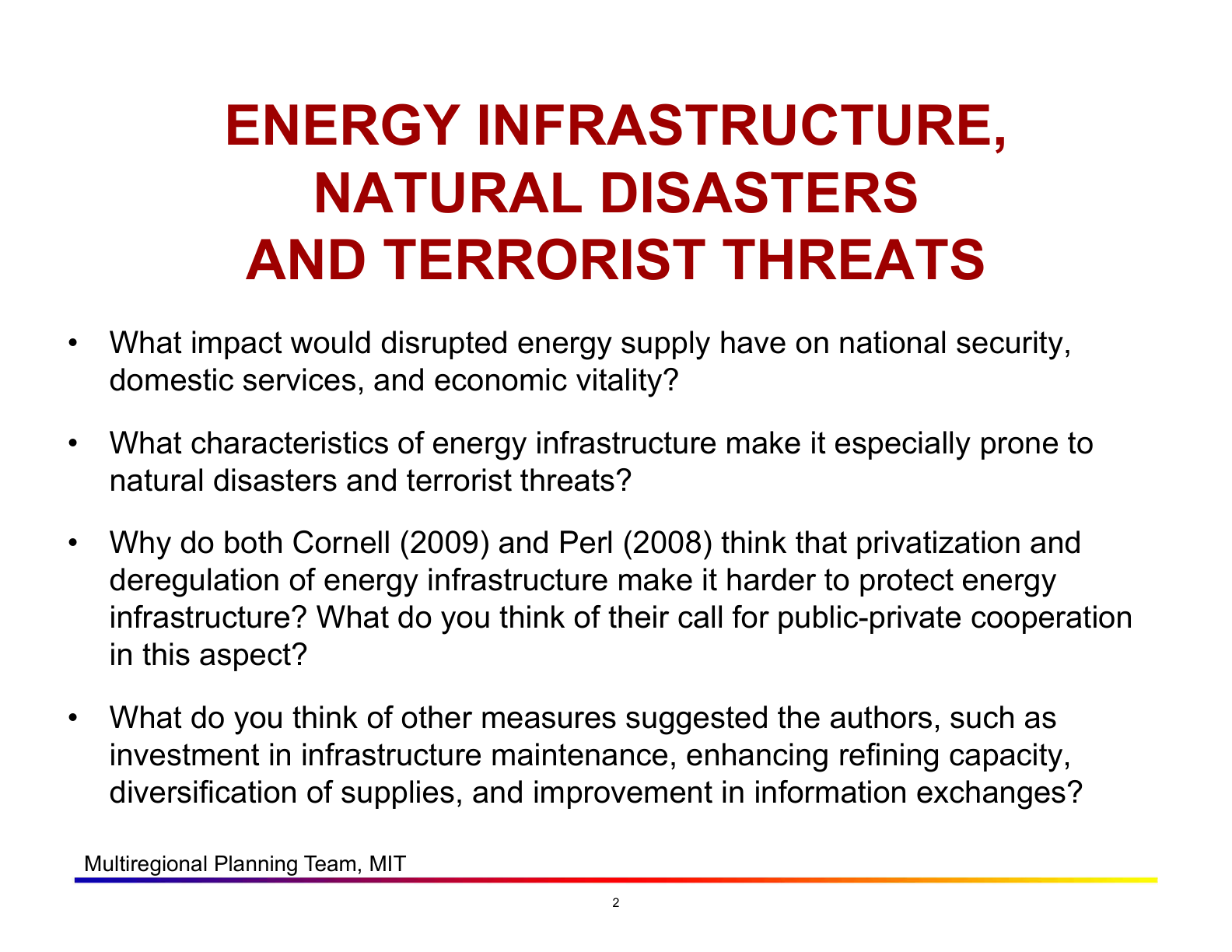
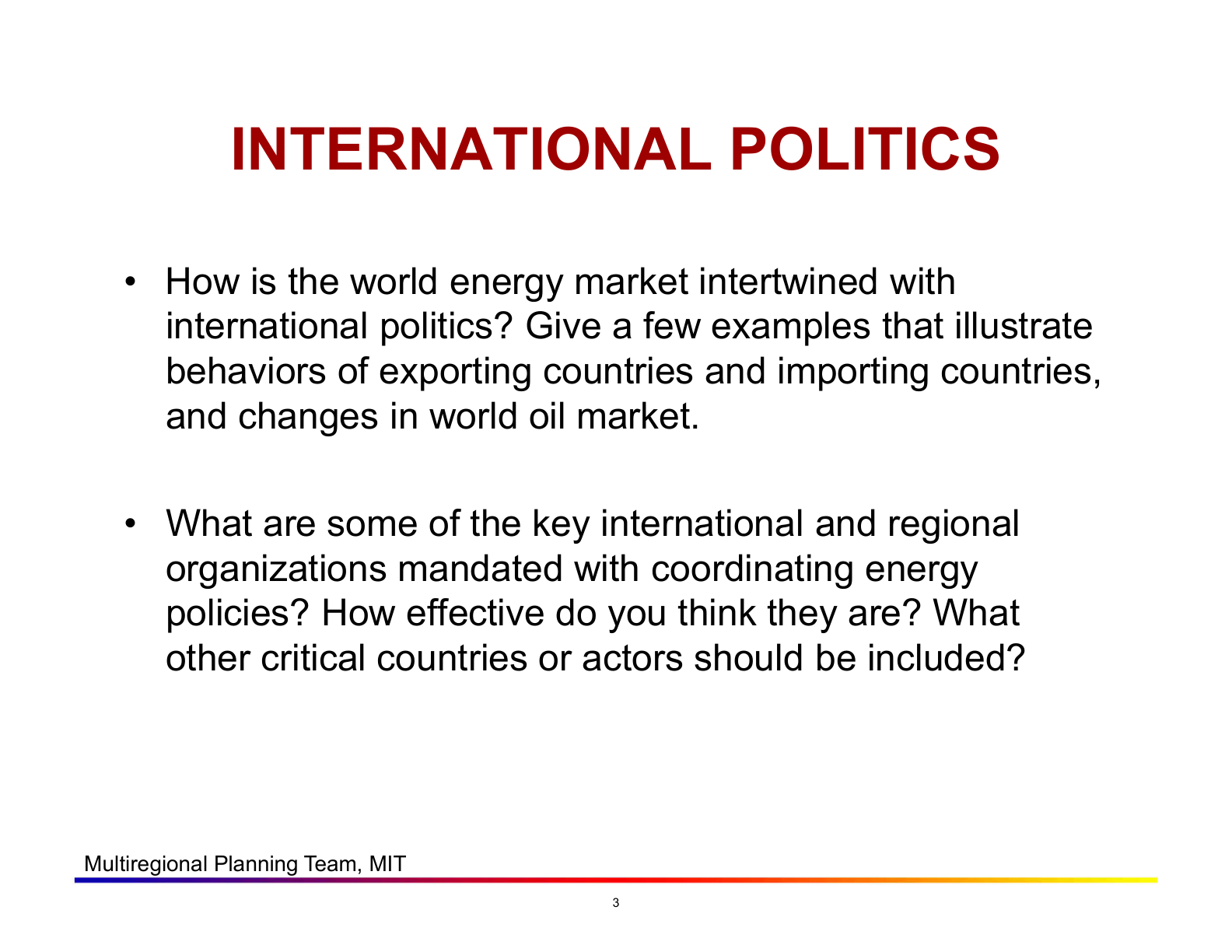
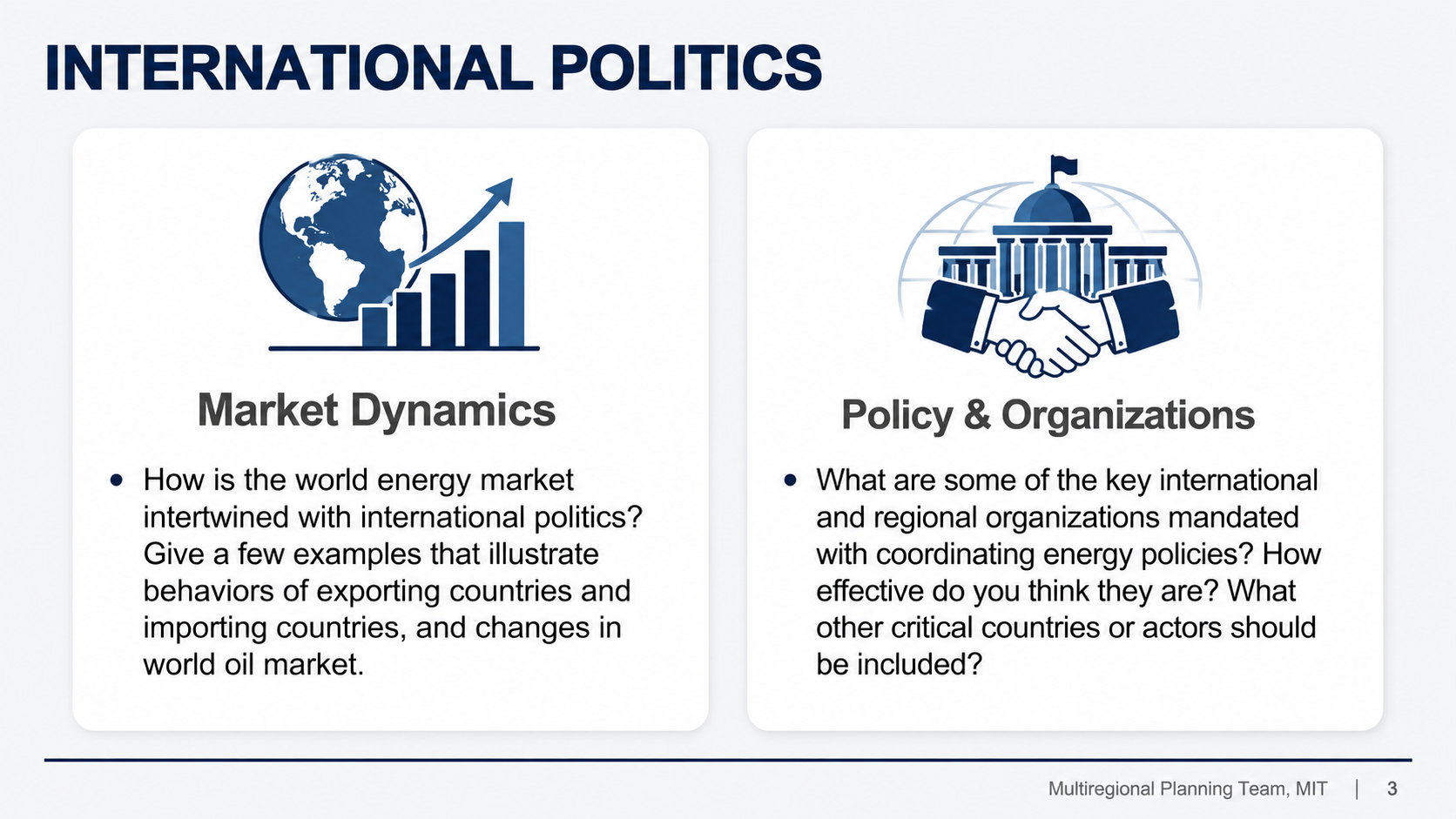
This lecture from MIT's "Infrastructure and Energy Technology Challenges" course covers critical topics — energy infrastructure vulnerabilities, international politics, and China's energy strategy. But the original slides present these complex, interconnected ideas as dense walls of bullet-point text, making it hard for students to follow the discussion structure:
- 📝 Long multi-sentence bullet points that compete with the professor's spoken explanation, causing cognitive overload
- 🏷️ Vague topic-label headings ("Decision Making") instead of clear takeaway statements that frame the discussion
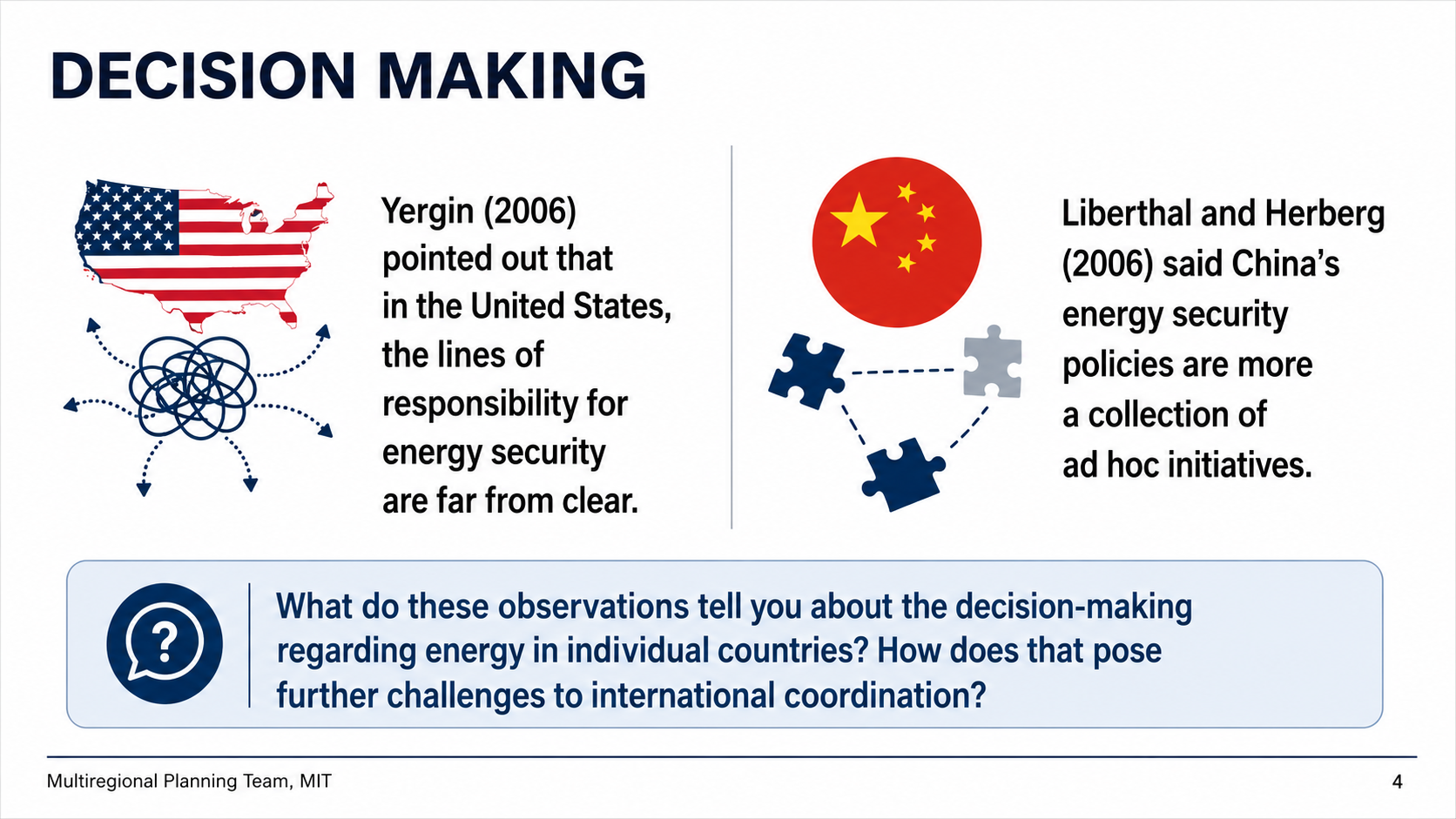
- 🔗 Complex relationships between energy policy, security, and international actors are invisible in flat text lists
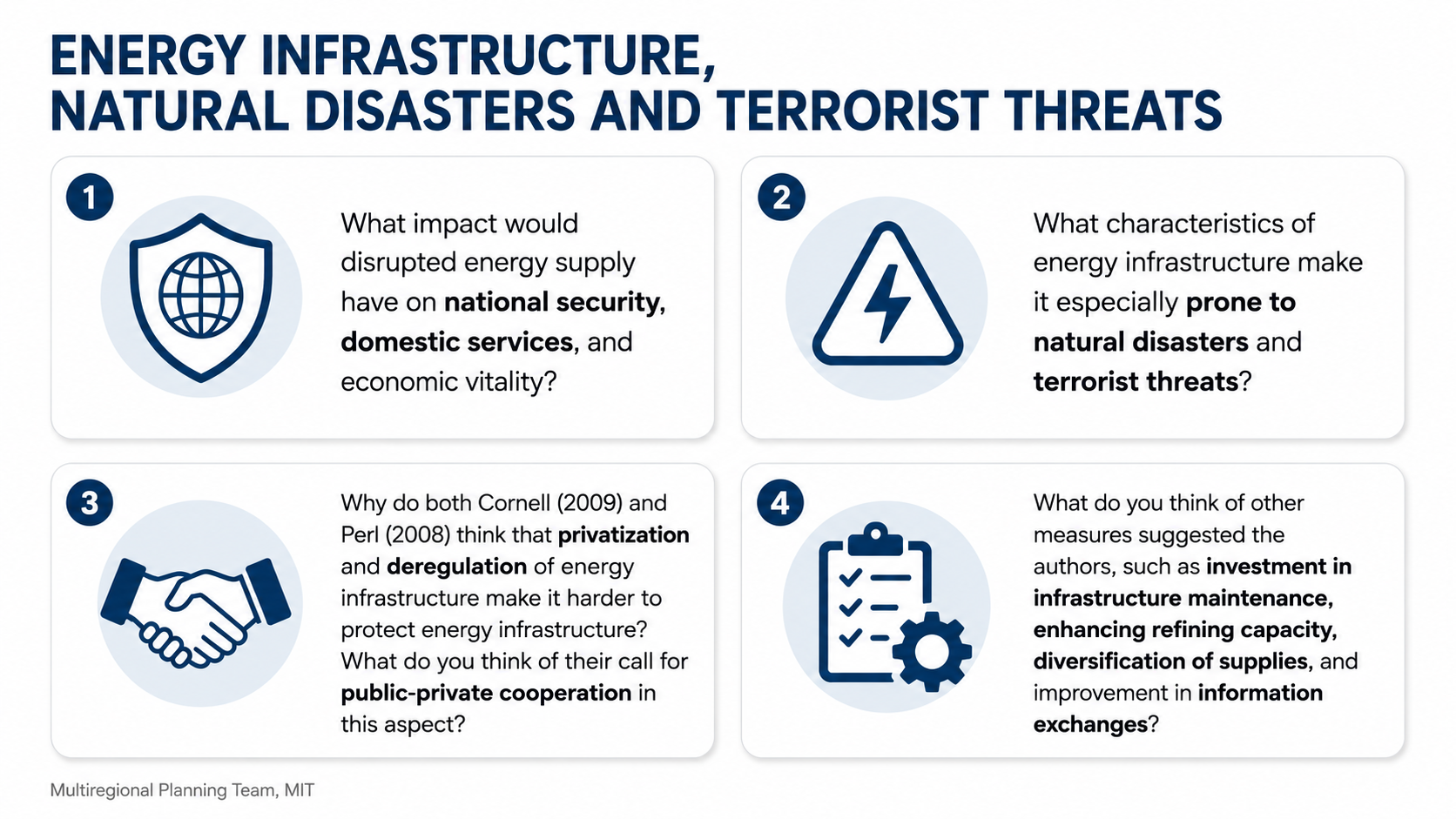
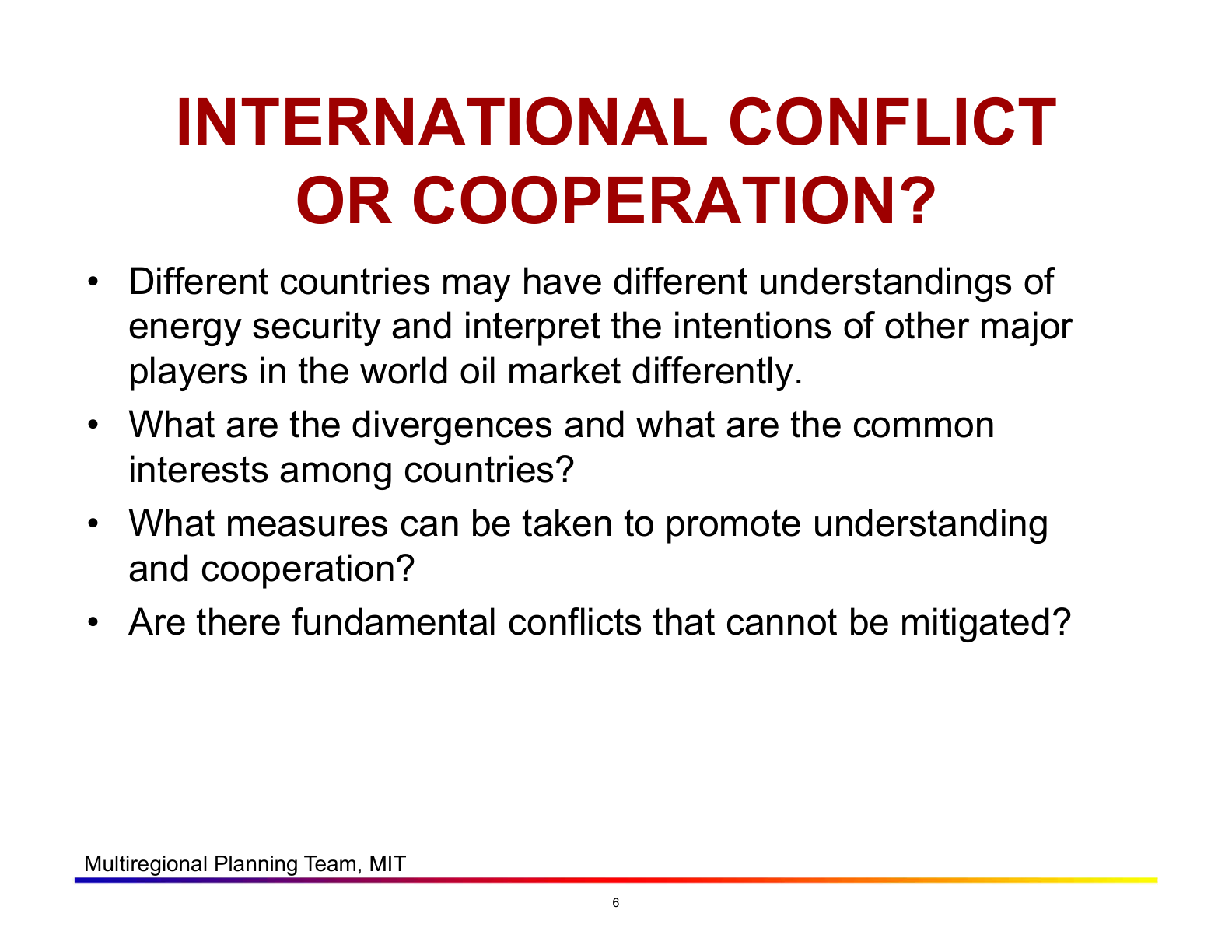
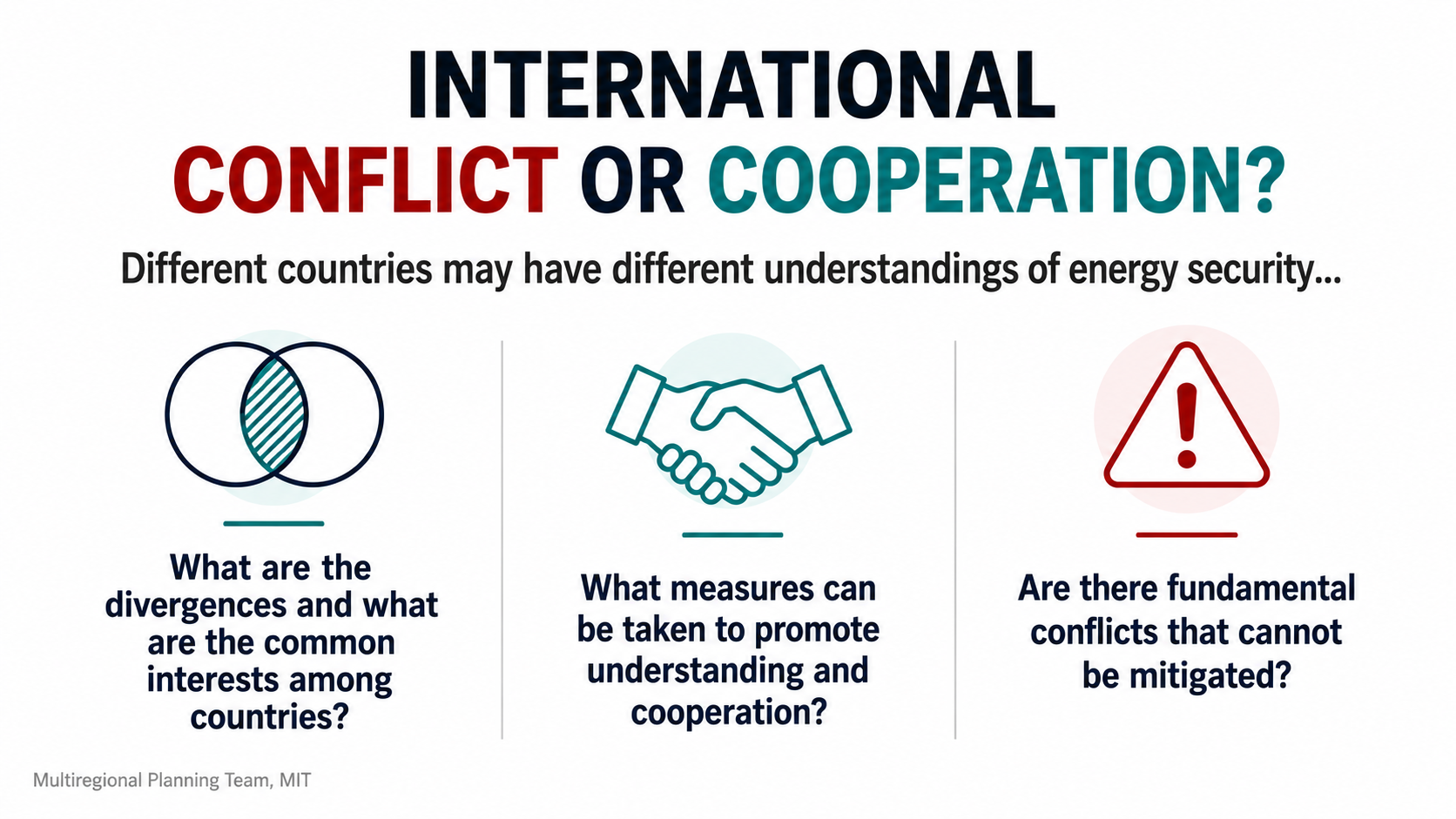
- 📊 Discussion questions with multiple sub-parts are crammed together, making it hard to prepare each question independently
Arty's redesign separates each discussion question visually, adds structural cues and icons for quick scanning, and transforms the flat text into a layout students can actually prepare from — all without changing a single word of the professor's content.
Original lecture from MIT OpenCourseWare — 11.165/11.477, Fall 2011, Professor Karen R. Polenske. Used under CC BY-NC-SA 4.0.